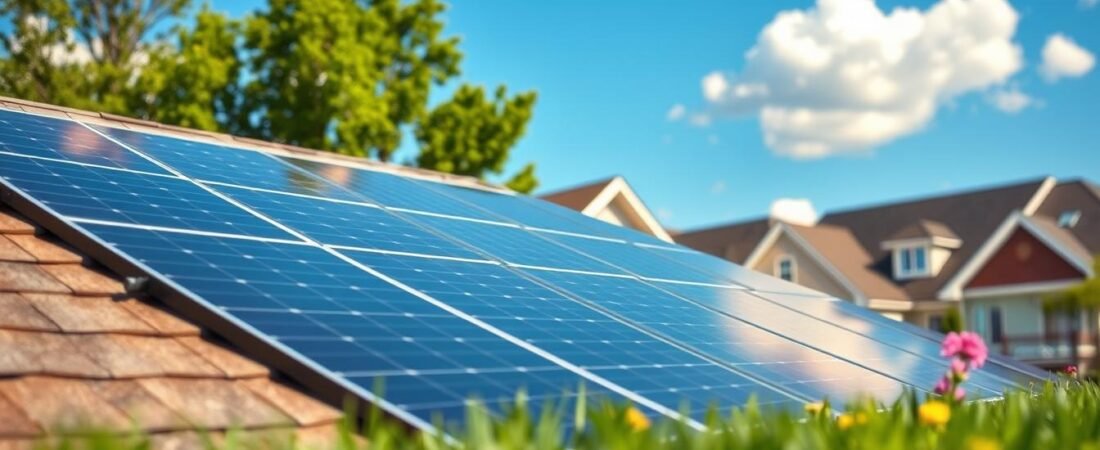
Thinking about a renewable energy upgrade? In April 2026 the average system price in West Lafayette sits at $2.86 per watt including installation. For a typical 12 kW array, homeowners see an average sticker of $34,370, with a common range from $29,214 to $39,526.
Your electricity bill keeps rising, and locking in decades of predictable energy charges can help. Choosing the right system size is key to managing upfront price and long‑term savings.
Getting a free quote from local installers can save thousands over the life of a system. We explain how per‑watt pricing and comparisons work so you can find fair financing and the best fit for your home.
Understanding the Solar Panel Cost West Lafayette Market
Recent market shifts have made renewable rooftop systems more accessible to more households. Local demand is rising for clean energy options that add value to homes and cut monthly electricity bills. Many buyers now view a quality installation as both an eco-friendly upgrade and a smart resale feature.
Current market trends show steady interest in distributed power and reduced reliance on grid electricity. Panels are built from abundant materials like sand, which supports long-term sustainability. The angle of your roof and sunlight exposure strongly affect how fast a system pays back.
Current Market Trends
More homeowners choose renewables to lock in stable energy use and increase home value. Professional installation is becoming standard to maximize production and longevity.
Why Costs Vary
- Roof angle and shading change energy yield and system sizing.
- Equipment brand and inverter choice affect price and reliability.
- Labor and local permitting drive installation time and expense.
“Positioning and quality installation are the biggest factors in long-term savings.”
| Factor | Impact on Price | Effect on Energy | Notes |
|---|---|---|---|
| Roof angle & shade | Medium | High | Can change payback by years |
| Equipment quality | High | Medium | Better warranties, higher upfront price |
| Labor & permits | Medium | Low | Varies by neighborhood and installer |
Factors Influencing Your Total System Price
Several site-specific factors shape what you’ll pay for a rooftop energy system. Your household’s daily usage and roof layout set the baseline for size and equipment needs.
Get accurate data on monthly electricity use before shopping. That data helps installers recommend the right system size and avoid overspending.
- Roof complexity and shading increase labor and installation time.
- Higher-quality solar modules and inverters raise the upfront price but often extend life and yield.
- Financing choices let you spread payments while you start saving on energy bills.
Professional estimates use property-specific measurements to map the best layout and predict annual production. Comparing offers helps you see how price reflects durability and warranty.
“Size, equipment quality, and accurate electricity data determine the most realistic price and payoff timeline.”
| Factor | How it Affects Price | Impact on Energy |
|---|---|---|
| Usage & sizing | High | High |
| Roof work & mounting | Medium | Medium |
| Equipment quality | High | Medium |
Average Costs Based on System Size
System size drives most of what you’ll pay and how much electricity you can produce. A typical 5 kW installation in West Lafayette runs about $14,321. That reflects an average price of $3.70 per watt, which many installers use to compare offers.
Comparing Cost Per Watt
Doubling the system size roughly doubles the price. For example, a 10 kW system is about $27,000. Smaller size examples: 6 kW ≈ $15,700 and 8 kW ≈ $20,800.
Labor and permits add to the total. Expect labor near $3,000 and additional fees that can raise system costs by several thousand dollars. You can use the federal tax credit to lower your net expense.
“Using a clear per-watt comparison makes it easier to compare quotes from different installers.”
| System (kW) | Approx. Price | Per-Watt | Notes |
|---|---|---|---|
| 5 kW | $14,321 | $3.70 | Average household size |
| 6 kW | $15,700 | $2.62* | Small increase in production |
| 8 kW | $20,800 | $2.60* | Good for larger use |
| 10 kW | $27,000 | $2.70* | Includes ~ $3,000 labor |
- Compare price per watt when you request a quote.
- Ask installers for line-item breakdowns to see equipment, labor, and permits.
- Factor tax credits and financing to estimate net system costs and payback timelines.
Long-Term Financial Savings and Payback Periods
Investing now in rooftop generation can lock in long-term returns that outpace utility rate increases.
Local homeowners typically save about $23,668 over 25 years on electricity by switching to renewable rooftop systems. That projection assumes average usage and steady production from the installed equipment.
The typical payback period is roughly 16.63 years. After that point, your system effectively produces free electricity and delivers ongoing savings to the home.
“Most homeowners see solid returns on their investment over a 25–30 year system life.”
- Warrantied performance: Modules are designed to run optimally for about 25 years, protecting long-term savings.
- Financing helps: Loans let you start saving on energy costs immediately while you repay the investment.
- Resale value: A quality installation often increases property appeal and market value.
| Metric | Value | Why it matters |
|---|---|---|
| Projected 25-year savings | $23,668 | Reduces lifetime energy costs |
| Payback period | ~16.63 years | After this, production is net gain |
| Typical system life | 25–30 years | Long-term returns and reliability |
Financing Options for Your Solar Investment
How you finance clean energy at home determines when you start saving and how much you keep over decades.
Cash Purchases
Paying cash gives the best long-term savings because you avoid interest. A straight purchase also maximizes your share of any federal tax credit and raises lifetime returns.
Cash buyers see higher net savings over 25+ years. If you plan to stay in the house long term, ownership often adds resale value and lowers lifetime energy expense.
Loans and Leases
Indiana residents can get $0-down loans that let them start saving on their monthly electricity bill from month one. If loan payments are lower than your current electric bill, you often save immediately.
Leases and PPAs provide no-money-upfront access to panels and immediate savings. Many providers now pass federal credit benefits to customers, so you still capture some tax advantages.
“Choosing the right financing makes clean power affordable today while protecting long-term savings.”
- 0-down loans start savings immediately.
- Cash purchases yield the highest lifetime savings.
- Leases and PPAs suit renters or those who prefer no ownership.
Compare offers and use a trusted local resource like community pricing data or review installer options at local financing services to find the best plan for your household.
Navigating Federal and Local Solar Incentives
Claiming available tax credits is one of the fastest ways to shrink your upfront investment in home energy systems. The federal tax incentive covers 30% of the total system price, which directly lowers your net price and shortens the payback period.
Indiana also helps. Installations and solar panels are exempt from state sales tax. Your property tax base won’t rise after adding an array.
Local rebates and utility programs can stack with the federal tax credit. That combination improves long-term savings and reduces financing needs.
- Use the 30% federal tax credit to cut the net price right away.
- Take advantage of Indiana’s sales and property tax exemptions to keep more savings.
- Ask local installers to identify state and utility rebates that apply to your systems.
“Combining federal credits with state exemptions and local rebates yields the best financial outcome.”
| Incentive | What it Covers | Typical Impact |
|---|---|---|
| Federal tax credit | 30% of system cost | Major upfront savings |
| Indiana sales tax exemption | Exempts equipment purchases | Reduces final price |
| Property tax exemption | No increase to assessed value | Protects long-term savings |
| Local rebates | Varies by program | Further lowers payback |
The Importance of Professional Installation
A quality installation sets the foundation for decades of reliable home energy and fewer surprises.
Hire licensed installers to ensure your system runs at peak performance for 25 years. Experts size the system to match your home’s electricity needs. They also follow industry best practices to protect your roof during mounting.
Maintenance and System Longevity
Yearly maintenance keeps electrical and mechanical parts in top shape. Simple checks can prevent common failures and keep production steady.
Cleaning schedules depend on local weather and debris levels, so ask your installer for a plan tailored to West Lafayette homes.
“Professional installation is the foundation of long-term efficiency and safety.”
- Licensed crews ensure correct system size and safe electrical integration.
- Annual inspections extend lifespan and protect your energy investment.
- Regular cleaning and timely repairs keep panels producing maximum power.
| Service | Why it Matters | Typical Frequency |
|---|---|---|
| System sizing & design | Matches production to household electricity use | One-time at install |
| Roof & mount inspection | Protects roof integrity and prevents leaks | Annually |
| Electrical safety check | Prevents faults and maintains warranties | Annually |
| Cleaning | Maximizes power output in dusty or pollen seasons | As recommended by installer |
Investing in professional installation reduces long-term risks and helps your household get reliable, clean energy for years to come.
Selecting the Right Solar Installer for Your Home
Picking an installer is about more than price—it’s about warranties, workmanship, and long‑term performance.
Look for firms with proven experience. SunPower Inc. (Elite+ since 2014) and Bone Dry Solar (30+ years in home improvement) bring deep installation expertise.
YellowLite and Superior Energy Solutions are vetted local options with strong track records and reliable energy data for homeowners.
Get multiple quotes and ask each installer to show the price per watt, warranty length, and expected savings by year.
“Comparing quotes on the EnergySage Marketplace can lower prices by up to 20% compared with working with a single company.”
- Request itemized quotes that list equipment, labor, permits, and expected annual production.
- Confirm licensing, insurance, and local references before signing.
- Use marketplaces like EnergySage to compare offers and financing options side-by-side.
| Installer | Founded | Strength |
|---|---|---|
| SunPower Inc. | 2014 | High-efficiency Monolith modules; Elite+ installer |
| Bone Dry Solar | Established 30+ years | Home improvement experience; solid installations |
| YellowLite | 2009 | Top contractor recognition; consistent quality |
| Superior Energy Solutions | 2009 | Local energy expertise; tailored site planning |
Final tip: Get at least three quotes, check warranties, and choose the installer who clearly explains financing, expected savings, and system size for your home. That diligence protects your investment for years.
Conclusion
Choosing the right systems starts with clear goals for your home and a realistic view of future bills. Match daily usage to system size, and prioritize equipment and installer quality to protect long‑term value.
Federal and local incentives can lower upfront cost significantly. Ask installers for itemized quotes and compare warranties, expected yearly output, and financing to find the best fit.
Professional installation and simple annual maintenance keep systems productive for many years. When you’re ready, review vetted options like local installer services to get multiple quotes and start your journey toward energy independence.