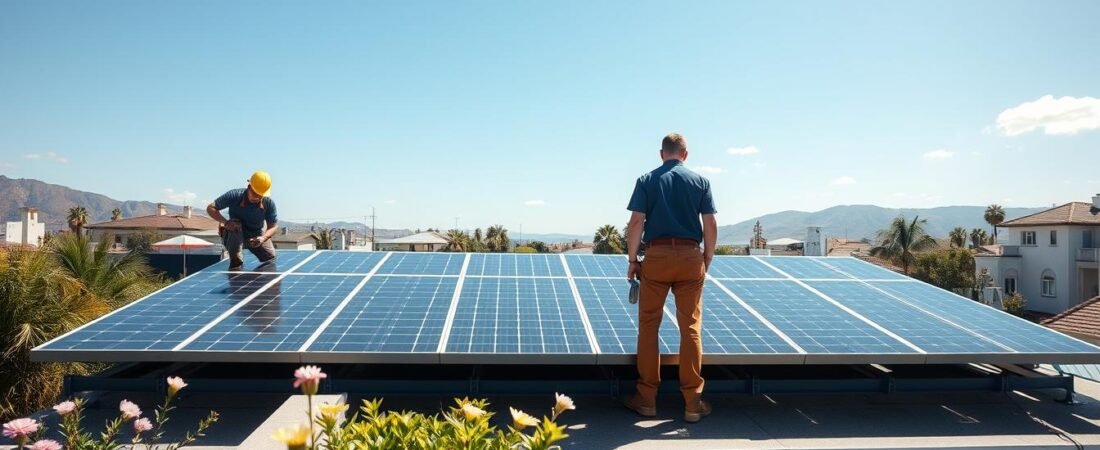
Finding a reliable provider is the first step toward cutting monthly energy costs in Arizona. With more than 300 sunny days a year, local households can capture significant value from rooftop systems.
Our guide highlights top-rated local installers who focus on quality and long-term performance. We combine industry data and real customer outcomes to help you choose a partner that delivers a smooth, dependable transition to clean energy.
Choosing the right professional means securing a durable system that can power your home for decades. For a closer look at a top provider with certified technicians, tailored designs, and solid warranties, see this resource from Sol-Up: trusted California installers.
Start smart: evaluate efficiency, warranties, and service to maximize savings and peace of mind.
Why Glendale is the Ideal Location for Solar Energy
With more than 300 sunny days a year, local residents can turn abundant sunlight into predictable savings.
Consistent sunshine and rising utility costs make this region a top choice for solar energy. Arizona saw electricity prices climb 22% from 2020 to 2024, so homeowners are looking for ways to protect their money.
A properly designed system on your roof can deliver steady power and lower monthly bills for years. Many customers cite strong reviews and long-term savings that offset the initial cost of equipment and panels.
Choosing a reputable company ensures systems are sized and oriented for local climate conditions. Our rating evaluates each installer on service, price, and their ability to handle complex installations.
Understanding the Benefits of Solar Panel Installation Glendale
Adopting clean energy at home cuts emissions and steadies your electricity costs over time.
Environmental Impact
Environmental Impact
Generating power on-site lowers your household’s reliance on fossil-fuel sources. This reduces greenhouse gas emissions and helps improve local air quality.
Many homeowners cite positive reviews about reduced environmental footprint after a professional installation. Over the years, the cumulative effect adds up.
Long-Term Cost Stability
Long-Term Cost Stability
A well-sized system limits exposure to volatile utility rates. Families often see lower monthly bills and steady long-term savings.
Initial cost is offset by recurring reduced electricity spending. In many cases, payback occurs within several years, and net savings grow afterward.
- Reduces grid demand and supports cleaner local energy.
- Immediate bill relief for homeowners after activation.
- Positive customer feedback highlights reliability and value.
| Benefit | Immediate Effect | Effect Over Years |
|---|---|---|
| Environment | Lower emissions today | Meaningful cumulative reduction |
| Finances | Smaller monthly bills | Stable long-term cost and strong savings |
| Grid | Less peak demand | More resilient local energy supply |
How to Select a Reputable Solar Company
Pick a provider whose work and warranties show they stand behind every system they sell.
Start with experience. Look for a company with at least five years in the industry. Firms with track records can support your home for many years and answer tough questions quickly.
Always ask about the workmanship warranty. A ten-year labor warranty is the industry standard and protects you if equipment or installation needs service.
Check online reviews and a company rating from trusted sites. Good reviews reveal how a team handles equipment care and whether they offer battery options that meet your needs.
- Customer service: Responsive teams keep you informed from estimate to final approval.
- Transparent cost and incentives: Top companies explain total cost and rebate options.
- License and insurance: Verify credentials to protect your property during installation.
What to Expect During the Installation Process
Knowing each step ahead of time removes surprises and speeds up the setup of your new system.
Site Assessment
First, a certified company inspects your roof. They check structure, shading, and orientation to confirm the system will perform well.
The team measures roof space and notes where panels and equipment will sit. This helps set an accurate cost and timeline.
Permitting and Equipment
The installer handles permits and buys approved equipment. This step makes sure local rules are met and avoids delays.
Expect procurement and scheduling to take a few weeks before crews arrive for the on‑roof work.
Final Inspection
After the crew mounts the panels and connects wiring, a town inspector verifies safety and code compliance.
The system, including any battery storage, is tested so you see expected energy output and understand operation.
- The on‑roof work usually takes one to three days, depending on complexity and roof access.
- Installers will walk you through wiring and placement so you know how your system functions.
- High customer ratings and clear communication make the process smoother for most homeowners.
| Stage | Typical Time | Key Outcome |
|---|---|---|
| Site Assessment | 1–3 hours | Scope, roof check, quote |
| Permitting & Equipment | 2–6 weeks | Permits pulled, equipment procured |
| On‑site Work | 1–3 days | Panels mounted, wiring installed |
| Final Inspection | 1 day | System approved and activated |
For a clear quote and local support, review our services and choose a company with strong reviews and a solid warranty.
Navigating Federal and State Solar Incentives
Understanding which programs apply to your home is the fastest way to lower project price and risk.
Homeowners can claim a 30% federal tax credit to cut the upfront cost of a full system. Many states add benefits, like sales tax exemptions on equipment, which can save thousands more.
Most reputable companies help customers file for credits and local rebates. Pairing your panels with a battery storage system may also qualify you for utility programs that reward grid support.
- Federal credit: 30% off system cost.
- State perks: Sales tax breaks on equipment reduce price at purchase.
- Battery pairing: Access to additional programs and higher long‑term savings.
- Warranty: Industry standard is a 25‑year protection on panels and performance.
| Incentive | Typical Benefit | Effect on Payback |
|---|---|---|
| Federal tax credit | 30% off system | Shortens payback by years |
| State exemptions | Lower purchase price | Saves thousands |
| Utility programs | Payments for grid support | Boosts annual savings |
Our rating rewards installers who guide customers through incentives and handle paperwork. That help often leads to better value and faster returns on your investment.
Maximizing Savings with Battery Storage Systems
Adding energy storage to your home turns midday surplus into reliable overnight power. Batteries make your system more flexible and boost value for homeowners who want lower bills and backup power.
Benefits of Backup Power
Why backup matters
Adding a battery storage system to your solar panels allows you to store excess energy for use during peak demand or grid outages. This reduces reliance on expensive electricity at night.
A reputable company will help select battery equipment that integrates with your existing system and home wiring. Good installers size the battery so you get the most savings and years of reliable use.
“Many customers say backup power provided peace of mind during summer outages.”
What homeowners report:
- Higher self‑consumption so more of your generated energy powers your home.
- Lower evening bills because stored energy replaces grid purchases.
- Long‑lasting systems that add value and improve comfort during outages.
| Feature | Benefit | Effect |
|---|---|---|
| Battery capacity | Backup hours | Reduced grid use |
| Integration | Seamless operation | Higher self‑consumption |
| Installer rating | Trusted support | Better long‑term savings |
Comparing Cash Purchases and Solar Leases
Compare total lifetime cost, not just the upfront price, to see which option fits your budget and goals.
Cash purchase: Buying a system outright lets you claim federal and state incentives. That often leads to higher long‑term savings and faster payback. You own the equipment and any increased home value.
Lease option: A lease or PPA requires little to no money up front. Homeowners get predictable monthly payments and lower immediate out‑of‑pocket cost.
Ask any company for a detailed estimate that shows projected electricity production for both purchase and lease choices. Compare year‑by‑year savings and total price over the expected life of the system.
Watch for an escalator clause in leases. Ask questions so you know if monthly costs rise over time.
“Many homeowners prefer the warranty protection that comes with a lease, since the company handles maintenance and repairs.”
| Option | Upfront Cost | Who Owns Equipment |
|---|---|---|
| Cash Purchase | Higher | Homeowner |
| Lease | Low/None | Provider |
| Key Benefit | Full incentives | Predictable payments |
- Tip: Ensure your roof is sound before any work begins.
- Review warranties and read customer reviews to check company reliability.
Evaluating System Size and Energy Production
Sizing your system correctly is the most important step to matching your home’s average electricity use.
A qualified installer will inspect roof orientation, shading, and household habits to create a reliable estimate of production. This review determines how many panels you need and whether adding a battery makes sense.
Homeowners should compare the company’s projected energy output with their past bills. Ask for annual and monthly production numbers so you can see seasonal differences.
Larger systems often require more equipment up front, but they can increase long-term savings by generating extra clean energy that offsets higher bills over the years.
“Accurate sizing prevents shortfalls and makes sure the system meets your home’s needs.”
Look for transparent companies that share modeled data and clear assumptions. Good reviews and a detailed estimate help you choose a system that delivers reliable electricity and steady savings.
The Role of Local Utility Policies in Your Savings
Your real savings depend less on production and more on how local utilities credit exported energy.
APS and SRP each use net billing rules that affect the value you receive for energy you send to the grid.
Export rates are often lower than retail electricity prices. That gap makes battery systems attractive because they let homeowners store midday power for evening use.
A qualified installer will review utility rates and configure the system and battery so you keep more of what your system creates.
Local programs also pay participants for helping reduce peak demand. Those payments can add up and boost your long‑term savings by thousands of dollars over the years.
“Understanding utility agreements is critical to maintaining projected monthly savings.”
| Policy Element | Why It Matters | How to Optimize |
|---|---|---|
| Net billing rates | Determines credit for exported energy | Use batteries or time shifts to raise self‑consumption |
| Peak demand programs | Offers payments or bill credits | Enroll and follow curtailment events |
| Rate changes over time | Can alter payback and yearly savings | Choose a company that tracks policy updates |
| Interconnection rules | Affect how quickly systems can start earning credits | Work with an installer experienced with APS and SRP |
How Professional Ratings Help You Choose an Installer
A clear rating gives homeowners an easy way to separate strong companies from weak ones.
Professional rating systems compare firms on customer service, installation quality, and business transparency. They show how a company handles permits, timelines, and customer questions during the process.
When you read reviews, look for mentions of permitting and how the installer answered tough questions. Good feedback often notes whether crews respected safety and followed a clear process.
A high rating usually means the company uses durable panels and quality equipment that last for years. It also signals solid warranties and responsive service when customers need help.
Choose an installer with a proven track record. That helps protect your home, your power needs, and your long‑term savings. Ratings are a simple tool to avoid common pitfalls and find a partner you can trust.
“Ratings help buyers focus on installers who back their work with warranties and clear communication.”
- Check reviews for permitting and follow‑through.
- Prioritize companies with multi‑year service records and strong warranties.
- Use ratings to compare projected system performance and post‑sale support.
Increasing Your Home Value Through Solar Upgrades
A modern energy system can turn an ordinary roof into a strong selling point for prospective buyers.
Installing solar panels is a proven way to increase market value. Studies show an average uplift near 4.1% of home price. That bump makes properties more attractive to buyers who want lower ongoing costs.
Homeowners who choose a professional panel installation often report faster sales and higher offers. In Arizona, the added value from panels is typically exempt from property tax assessments, which preserves that financial gain.
Reduced monthly electricity bills also make a house easier to maintain. Buyers see immediate savings and long-term benefits, so systems often become a key selling feature.
- Value lift: ~4.1% average increase in sale price.
- Tax advantage: value usually excluded from property tax in Arizona.
- Buyer appeal: energy savings and modern upgrades attract offers.
“A high‑quality installation not only lowers costs but enhances curb appeal and long‑term resale value.”
| Benefit | How Buyers See It | Financial Effect | Long‑Term Result |
|---|---|---|---|
| Value increase | Stronger listing interest | ~4.1% higher sale price | Higher net proceeds |
| Lower bills | Lower monthly cost of ownership | Immediate monthly savings | Ongoing affordability for buyers |
| Tax treatment | Perceived extra value | Often exempt from property tax | Preserves buyer savings |
| Modern upgrade | Better curb appeal | Stronger competitive edge | Easier resale in a sustainability market |
Conclusion
In short, investing in on‑site renewable energy brings steady savings and greater household resilience.
By using federal and state solar incentives, homeowners can lower the up‑front cost of a full system and speed payback. Choosing a trusted company ensures the installation is sized for your home and backed by multi‑year service.
Compare multiple quotes and weigh purchase versus lease. That step helps protect your budget and boosts long‑term savings. Take action now to secure reliable electricity and stronger home value for years to come.