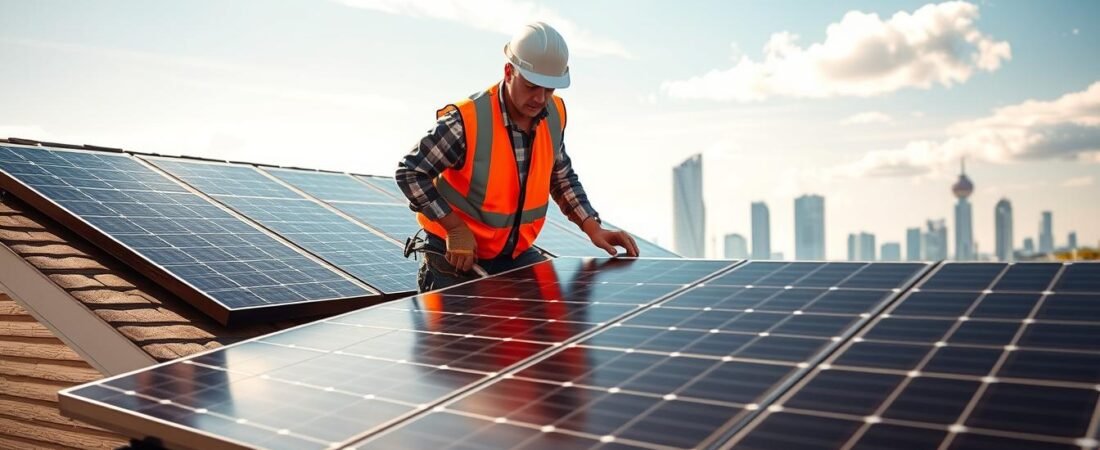
Need a dependable, local solution for renewable energy at your home or business? Our team delivers clear recommendations, durable components, and safe electrical work that respects your property and budget.
Reliable means transparent estimates, code-compliant work, and a process that keeps timelines and access needs in mind. We assess roof condition, shading, and system size so you can expect real savings on monthly energy costs.
We handle the full process: site assessment, system design, careful installation, and grid connection. Business owners and facility managers get planning that minimizes downtime and meets safety rules.
Incentives and tax credits may apply, and we will explain what to ask about and how to plan responsibly. A well-chosen system uses quality equipment, clear warranties, and realistic performance expectations for long-term success.
Read on to learn why local customers choose this approach now and how the right choices lead to lasting energy savings.
Why Go Solar in Birmingham, AL for Homes and Businesses
Reducing utility costs is a top reason owners choose on-site generation. Producing power where you use it lowers reliance on purchased electricity. That can shrink monthly bills and build steady energy savings over the years.
Lower electricity bills and long-term energy savings over the years
Payback matters: upfront costs are offset by cumulative savings if your system is sized to match real use. A right-sized approach means realistic returns and faster break-even.
Boosted property value and a smart renewable energy investment
On-site generation often raises curb appeal and resale value. For a home or commercial building, this upgrade becomes a tangible asset that helps stabilize operating costs.
Potential tax credits, rebates, and incentives available today
Tax credits and local rebates may lower net cost. Confirm eligibility and paperwork early so incentives are applied correctly.
Cleaner power with reduced toxic emissions
Using renewable energy reduces greenhouse gas output compared to burning fuels. That means cleaner air, fewer toxic emissions, and more energy independence against fuel price swings.
For business owners, predictable energy costs help budgeting and support sustainability goals. Learn more about tailored options on our services.
solar panel installation birmingham al That’s Built Around Your Energy Needs
We begin with a fact-based site review. Every plan starts by mapping how your property uses energy and where sunlight reaches best. This helps us design a system that fits current needs and can grow later.
Thorough site evaluation:
- Roof condition, angle, and orientation to assess structural readiness.
- Shading patterns from trees or nearby buildings that reduce midday output.
- Electrical layout and safe routing for future expansions.
System sizing uses real data. We review recent utility bills, look at usage trends, and factor in new loads like EV charging. That creates accurate performance estimates and clear payback expectations.
Design tradeoffs matter. Limited roof area may call for higher-efficiency modules. Open land can make ground mounts more cost effective. For complex roofs we create custom layouts that balance output and aesthetics.
Commercial projects get added planning for access, safety, and minimal downtime. Once the layout is set, choosing the right panels and supporting components determines long-term efficiency and durability.
Solar Panel and System Options for Efficiency, Durability, and Design
Choosing the right equipment shapes how much energy your rooftop produces and how long the system lasts. The components you pick—modules, inverters, mounts, and wiring—drive output, lifetime, and upkeep.
Monocrystalline modules deliver the most output per inch, so they fit tight roofs and raise efficiency when space is limited.
Polycrystalline options are more budget-friendly. They produce less per square foot but still provide meaningful power when space is available.
Building Integrated Photovoltaics (BIPV) like solar shingles replace roofing materials for a seamless look. BIPV suits visible rooflines where aesthetics matter.
Reliable inverters and secure mounting are critical. Choose converters with safe shutdown features and racks rated for heat, humidity, and storms.
Design systems to scale. Start with a right-sized layout and allow space and wiring for future expansion. Pairing a battery can add resilience when sunlight is inconsistent.
| Option | Best for | Pros | Cons |
|---|---|---|---|
| Monocrystalline | Limited roof area | High efficiency, compact | Higher cost |
| Polycrystalline | Cost-sensitive projects | Lower cost, solid output | Lower efficiency |
| BIPV (shingles) | Design-forward roofs | Seamless look, replaces roofing | Higher install complexity |
| Premium balance-of-system | Heat/storm-prone areas | Durable, safer conversion | Higher upfront price |
After selecting components, customers ask about process and disruption. Learn more about how we present proposals and timelines on our professional website.
What to Expect From Our Solar Installation Service in Birmingham
Expect a clear, step-by-step plan that maps site findings to a tailored energy solution. We begin with a hands-on review and end with a written proposal you can use to decide. The process is built for clarity and predictable timelines.
On-site assessment and a clear proposal for your solar energy solution
We inspect roof condition, shading, roof orientation, and electrical access. Bring recent bills and any plans for added loads. The proposal lists recommended system size, expected production, equipment choices, and a simple scope of work.
Project planning around your property and business operations
For commercial work we coordinate staging, roof access, parking impacts, and safe work windows. That planning reduces downtime and keeps teams and customers moving.
Professional installing solar with quality workmanship
Expect neat conduit runs, proper flashing and sealing, labeled electrical ties, and full cleanup. Our crews follow codes and use premium components suited for heat and seasonal storms.
Connection-ready setup and safe electrical integration
Systems are wired for safe grid tie-in and to meet utility requirements. We emphasize interconnection approval before major purchases to avoid rework.
Final walkthrough, system education, and performance expectations
At handoff we show monitoring tools, normal operating signs, and when to request maintenance or service. Production varies by season and shade; we set realistic power and electricity expectations up front.
| Milestone | What we deliver | Customer role |
|---|---|---|
| Site assessment | Measurements, photos, load review | Provide recent bills, access |
| Proposal | Size, equipment, timelines, costs | Review and approve |
| Project planning | Staging, safety plan, schedule | Coordinate site access |
| Installation & wiring | Clean workmanship, labeled panels and breakers | Confirm work windows |
| Handoff | Monitoring setup, maintenance info | Attend walkthrough |
Clear communication, dependable scheduling, and a customer-first company approach guide every step. For more detailed information about our systems and local process, see our solar energy systems page.
Grid Connection, Excess Energy, and Alabama Power Interconnection Basics
A smooth interconnection means planning paperwork early and matching system design to utility rules. Even the best equipment needs a proper grid tie to operate safely and to meet billing rules.
Submit your interconnection application through PowerClerk. Alabama Power requires applications be filed via that online portal. Get approval before you buy equipment to avoid redesigns or delays.
How approval, rates, and excess energy work
Approval matters because the utility reviews safety, meter changes, and whether your chosen size fits interconnection rules.
Customers with generation are subject to the RGB rate rider for supplementary, back-up, and maintenance power reliability. Your system serves your home or business first; any excess energy then flows to the grid.
Sell-back options, rates, and practical checks
Smaller systems under 100kW may use Rate PAE to sell surplus. Larger systems (100kW+) use Rate CPE. Check zoning, HOA rules, permits, and inspections early to keep timelines intact.
Storage and resilience: battery storage is a common add-on when sunlight is inconsistent. Batteries help shift production and improve on-site power during outages.
Questions about interconnection or rates? Contact g2apcrenewables@southernco.com or ask our team to coordinate the application and design.
Conclusion
Right-fit equipment and thoughtful design make long-term power savings simple and reliable.
Good outcomes start with fit. The right system size, quality components, and a design that respects sunlight and shading set realistic expectations for home and commercial owners.
Remember the steps: assessment → proposal → installation → grid-ready setup → walkthrough and ongoing support. Plan interconnection and utility paperwork early to keep timelines and budgets steady.
Next step: request an on-site assessment and a clear proposal so you can compare options and incentives. Confirm tax credits and related credits during planning to improve ROI.
For a practical primer, see our solar power roof guide and contact our company for a straightforward service that delivers safe, code-compliant results.