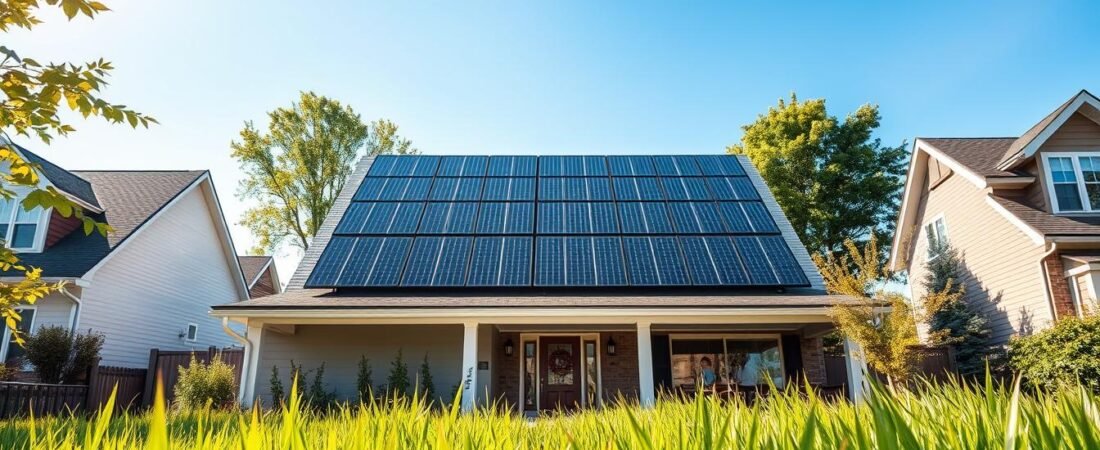
Thinking about switching your home to clean energy? This quick guide helps homeowners in Grand Rapids weigh price, size, and savings. As of April 2026, the average system runs about $3.03/W and local systems average 11.01 kW.
Rising utility rates in Michigan—up 19% since 2020—make this an important time to compare options. You can choose cash, financing, or no-upfront models like Palmetto’s LightReach lease to lower monthly bills.
Over 25 years, many homeowners can expect significant savings. Our guide breaks down installation, incentives, and price drivers so you can estimate payback time and pick the right system for your roof.
Understanding the Solar Panel Cost in Grand Rapids
Many Grand Rapids homeowners now weigh long-term savings against upfront expenses when sizing a rooftop energy system.
The region’s electricity rates reflect local grid infrastructure and the regional energy mix. Michigan’s residential rate rose to 19.29 cents per kWh in 2024, which raises monthly bills for many families.
Installing solar panels helps a home generate its own power and cut reliance on the grid. The total installation is a major investment, but it can deliver lasting energy independence for your property.
“Matching system size to your household use is key to maximizing savings and reducing utility dependence.”
- Analyze your annual energy use to pick the right system size.
- Rising utility rates make local generation more attractive.
- Smart installation choices lower maintenance and improve returns.
| Driver | Impact | What to Do |
|---|---|---|
| Grid rates | Higher bills over time | Consider a larger system |
| Household use | Determines system size | Audit your energy use first |
| Installation quality | Affects output and life | Choose a certified installer |
| Local incentives | Reduce upfront cost | Check state and utility programs |
Current Market Pricing for Residential Systems
Local market quotes show a clear range in what homeowners actually pay for residential systems today.
Average Installation Costs
For a typical 11.01 kW system in Grand Rapids, MI, the average price is $33,312. Actual figures can fall between $28,315 and $38,309 depending on equipment and labor.
We use cost per watt ($/W) to compare quotes. That metric helps you see the true value behind each estimate.
Price Ranges by System Size
A smaller 5 kW setup will run about $15,128. This shows how system size directly affects your total investment and expected power output.
- Compare multiple quotes to confirm fair market prices for your home.
- Larger systems deliver more energy but raise upfront expenses.
- Review incentives and panel installation options to lower net costs.
| System | Avg Price | Range |
|---|---|---|
| 11.01 kW | $33,312 | $28,315–$38,309 |
| 5 kW | $15,128 | Varies by equipment |
How System Size Impacts Your Total Investment
Choosing the right system size directly shapes your upfront investment and long-term returns.
A 5 kW setup in Grand Rapids costs about $15,128. Doubling to a 10 kW setup doubles the price to $30,256.
That simple math shows why you should match size to your household needs. Larger systems deliver more power and more energy for your home, but they raise the initial price.
Use cost-per-watt when comparing quotes. It helps you see true value across different equipment and installation choices.
- Calculate annual use before choosing a size.
- Compare price-per-watt to spot better offers.
- Remember each system is unique; choose one that meets long-term power goals.
| System Size | Typical Price | Price per kW |
|---|---|---|
| 5 kW | $15,128 | $3,025.60 |
| 10 kW | $30,256 | $3,025.60 |
For local price context and to compare installers, check the local price data. That helps confirm whether a quoted installation aligns with market norms.
Why Electricity Rates Make Solar a Smart Choice
As electricity rates climb, more families are weighing home generation to stabilize monthly expenses. Higher grid prices change how homeowners measure long‑term value.
Rising Utility Rates in Michigan
Michigan’s residential rates rose from 17.5¢/kWh in 2021 to 19.3¢/kWh in 2024. Consumers Energy customers see about 18.80¢/kWh today, a sign of rising grid infrastructure charges.
That trend matters. When utility prices increase, generating your own power can lock in predictable energy bills and reduce exposure to future hikes.
“By producing on-site energy, many homeowners can avoid the biggest spikes in their monthly electricity bills.”
- Rates have climbed 19% since 2020, making solar panels a financially compelling choice for many in Grand Rapids.
- Local data suggests a typical home could save roughly $40,000 over 25 years after installation and incentives.
- Key factors include utility rates, household usage, and installation quality when estimating long-term savings.
Navigating Available Financial Incentives
A few targeted incentives and loans shift the math, letting many households start saving sooner.
Michigan Saves offers low‑interest loans for home energy projects. Loan amounts range from $1,000 to $50,000 with terms up to 15 years and rates as low as 4.44% APR.
That program can lower monthly payments and speed net savings from a new system. Homeowners who prefer financing often find this option straightforward and reliable.
Michigan Saves Loan Program
Loans cover equipment and installation, and they work well for owners ready to invest in long‑term energy savings.
PACE Financing for Property Owners
Property Assessed Clean Energy (PACE) lets commercial owners fund systems with no upfront cash. Repayments run up to 25 years and appear on the property tax bill.
- Michigan Saves: low rates, up to $50,000 and 15‑year terms.
- PACE: no upfront cost for commercial property, paid over 25 years.
- Check local rebates and remaining federal tax rules to cut net expenses.
“Understanding incentives is a vital step for any homeowner looking to maximize the financial benefits of their energy system.”
| Program | Who it helps | Term | Key benefit |
|---|---|---|---|
| Michigan Saves | Homeowners | Up to 15 years | Low APR, loans up to $50,000 |
| PACE | Commercial owners | Up to 25 years | No upfront cost; tax‑bill repayment |
| Local Rebates | Home & business | Varies | Reduces upfront price and speeds savings |
Exploring Flexible Financing and Leasing Options
Affordable monthly plans let many families get started with a home energy system today. If you prefer not to pay cash, leasing and financing make installation accessible without a large upfront investment.
Palmetto’s LightReach lease is one option that lets homeowners begin with no upfront payment and monthly terms starting near $73. A power purchase agreement (PPA) is another route: you pay only for the electricity the panels produce at a set rate per kWh.
“These flexible plans help more homeowners adopt a system that fits their budget and roof size.”
- No upfront lease: start generating power without a large investment.
- PPA: pay for actual production at a fixed rate to manage monthly electricity bills.
- Financing: loans spread the investment over time and can speed net savings.
Compare terms, check how your roof and household loads affect output, and choose the option that balances monthly payments with long‑term value.
Comparing Quotes to Maximize Your Savings
Shopping several offers lets you compare equipment, warranties, and local pricing. That step helps you find the right system for your home and budget.
Benefits of Using a Solar Marketplace
A marketplace collects bids from multiple installers so you can see real prices for your area. EnergySage users often see up to 20% lower prices than working with a single company.
Gathering side‑by‑side quotes gives clear data on warranties, inverter brands, and installation timelines. It also reveals available incentives and how a tax credit or rebate will change your net price.
- Compare equipment specs and expected electricity output per offer.
- Let competition lower costs and increase savings over time.
- Use the marketplace data to verify fair market price in Grand Rapids.
| What to Compare | Why it Matters | Action |
|---|---|---|
| Net price after incentives | Shows true money outlay | Ask for itemized rebates and tax credit details |
| Warranty & service | Protects long‑term output | Compare warranty length and what it covers |
| Equipment brand | Impacts performance and resale value | Request spec sheets and local performance data |
“Comparing multiple quotes is the best way to maximize long‑term savings and pick the right system.”
Assessing the Impact on Your Home Value
Homebuyers frequently value long‑term energy savings when they assess a property’s worth. A Zillow study found homes with solar panels sold for about 4.1% more than similar listings.
That boost matters in Grand Rapids. For a $250,000 home, a typical uplift exceeds $10,000, making the system an attractive asset for many homeowners.
The benefit is strongest when the equipment is owned. An owned installation delivers immediate electricity savings for the new owner and avoids transfer complications tied to leases.
“Owned systems often add measurable resale value and lower operating costs for buyers.”
When planning an installation, think about roof placement, visual appeal, and long‑term performance. A neat layout and quality equipment help buyers see real value.
- Owned systems typically yield higher resale premiums than leased ones.
- Energy savings plus incentives and the tax credit can improve net returns.
- For local guidance on whether this makes sense for you, see Is solar worth it in Michigan.
Conclusion
A clear estimate of long‑term savings and available incentives helps homeowners decide if a home energy system is a smart move.
In Grand Rapids, many owners can expect roughly $40,000 in savings over 25 years when they match the right system size with local rebates and the federal tax credit. With electricity rates near 19.3¢/kWh, generating on‑site power can steady your monthly bill and protect against rising utility rates.
Compare multiple quotes, weigh financing options like the Palmetto LightReach lease (no upfront and payments from about $73/month), and confirm final price after incentives. Doing this gives a clearer estimate of your investment, expected savings, and long‑term value for your home.