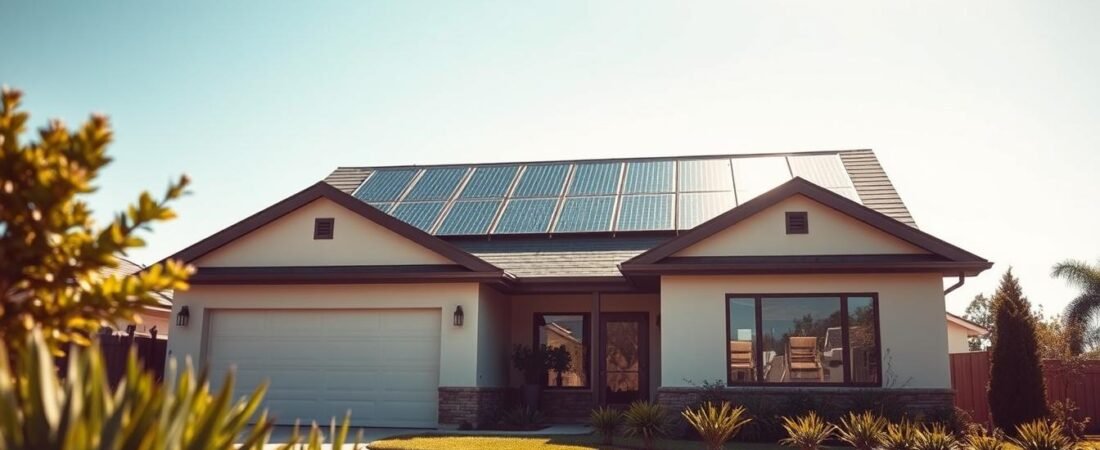
Thinking about going solar? This short guide gives a clear starting point so you can weigh the upfront price against long-term gains.
EnergySage data shows a 12 kW system lists at about $30,505 before any tax credit or local incentives. That figure helps set expectations when comparing bids and equipment types.
Most homeowners who install panels can expect to reduce their electricity bills substantially. Over 25 years, savings often range between $37,000 and $154,000 depending on system size and local rates.
What matters most is your roof, energy use, and the size of the array you choose. Larger arrays tend to lower the cost per watt and improve long-term returns.
Use this guide to break down panel installation steps, typical installation cost drivers, and how incentives and local labor affect your final price. That way, you can decide if now is the right time to move forward.
Understanding the Average Solar Panel Cost for Home Installations
A realistic price estimate helps you compare bids and plan financing. In 2026 the baseline cash price for a typical rooftop system sits near $21,816. This number gives you a starting point when requesting quotes.
Keep in mind the federal 30% tax credit can cut that total substantially. Equipment choice, roof complexity, and local permitting all push the final price up or down.
Use cost-per-watt to compare offers from different installers. NREL data and market reports make that metric useful when weighing efficiency and warranties.
Most homeowners see payback within about 10 years, after which the energy produced lowers monthly electricity bills. We suggest getting at least three quotes so you can spot labor, permitting, and incentive differences that affect the installation price.
- Baseline 2026 price: $21,816 (cash purchase)
- Subtract the 30% federal tax credit when applicable
- Compare offers using cost per watt and warranty terms
Current Market Trends for Residential Solar
Supply chain fixes and better manufacturing have made prices more stable across the country.
What that means: The National Renewable Energy Laboratory tracked big shifts. A 2021 study showed $3.16 per watt, roughly 22% above present rates reported in 2026.
Equipment Supply Chain
Manufacturing and logistics issues that pushed up prices during the pandemic have largely eased. That has made solar panels more widely available and competitive.
Labor and Overhead
Labor and overhead still make up a large share of total price. Many installers report that these items often approach half of the final installation bill.
- Cost per watt has fallen since 2021, improving value.
- Improved panel efficiency can reduce the number of modules you need.
- Transparent quotes help compare true panel costs and incentives.
“Prices have stabilized as of 2026.”
How System Size Impacts Your Total Investment
Choosing the right system size shapes both your upfront price and long-term returns.
System size is the primary driver of your total investment. Larger arrays need more panels, wiring, and labor, so the total price goes up.
At the same time, larger installs often yield a lower cost per watt because fixed soft costs—permitting, design, and crew time—get spread across more watts.
Your past 12 months of utility bills reveal how much electricity usage you need to replace. Most installers recommend sizing a system to cover 100% of annual use to maximize return and take full advantage of the federal tax credit and local incentives.
- A 10 kW system will carry a higher total than a 5 kW system, even with identical equipment.
- Larger arrays often reduce panels cost on a per-watt basis.
- Careful planning prevents overbuying capacity you won’t use.
“Size matters: get the capacity that matches your actual energy needs.”
Regional Variations in Solar Pricing
Local conditions and rules create big differences in what you’ll pay and how much power a system produces. Geography affects sunlight, crews, and permitting timelines.
Impact of Local Sunlight and Labor
Sunlight levels change how many panels you need to meet yearly electricity needs. Duller climates often require a larger system size to hit the same output as sunnier states.
Labor rates and permitting add real price variation. Busy markets with high wages or complex regulations raise installation bills.
- High-adoption states can lower panels cost per watt through volume.
- Local rebates and incentives reduce your final price and shorten payback years.
- Compare local quotes to see how roof orientation and weather change the system size you need.
Tip: Ask installers about local utility rebates and typical per watt figures in your area before you sign.
Breaking Down Equipment and Installation Expenses
Breaking down each piece of equipment helps you spot where real value — or waste — lives in a quote.
Hardware vs. soft costs: Modules themselves often make up only a small share of the total. Soft costs like permitting, customer acquisition, and labor can exceed hardware spend on many installs.
Panel Efficiency and Types
High-efficiency monocrystalline modules cost more but deliver greater power in less roof area. That can reduce your required system size and affect long-term returns.
Inverter Selection
Inverters vary from a single central unit to microinverters on each module. Microinverters or power optimizers improve output on shaded roofs but raise upfront price. Discuss options with your installer to see if the extra expense makes sense.
Racking and Wiring
Racking, flashings, and wiring ensure the system is secure and code-compliant. Poor choices here can shorten lifespan and raise installation cost through callbacks.
- Tip: Balance efficiency with budget and plan equipment to last 25 years.
- Tip: Ask for itemized quotes to compare cost per watt and warranty terms.
“Quality components and clear line items make comparing bids straightforward.”
The Role of Roof Characteristics in Final Pricing
Roof shape and shading often change both the work involved and the final price you’ll see on a quote.
The slope and orientation of your roof affect crew time and safety measures. Steep or tall roofs need extra fall protection and longer labor hours, which raises the installation cost.
A south-facing surface with little shade is ideal. it lets installers place fewer panels to hit a specific system size and improves long-term energy and electricity output.
If your roof has dormers, skylights, or many planes, expect more complex design work and higher labor charges. Trees that cast shade may need trimming or removal, an added expense to plan for.
Structural checks matter. A roofer should inspect shingles and framing before you start. If the decking or shingles need repair, that work should happen first to avoid removal and reinstallation fees later.
Optimize placement to maximize power and returns. Proper layout reduces losses and helps the installer quote an accurate per watt figure.
- Steep roofs increase labor and safety gear needs.
- Shade and orientation change required system size and output.
- Complex roofs add design time and higher quoted prices.
| Roof Factor | Impact on Installation | Typical Result |
|---|---|---|
| Slope / Height | More safety gear and time | Higher labor line item |
| Orientation & Shade | Needed system size and layout change | May raise panels count or reduce output |
| Complex Features | Extra flashing and design | Increased installation cost |
| Roof Condition | Pre-work or replacement required | Upfront repair charges |
“A quick roof inspection saves money down the line.”
If you suspect major repairs, read about roof replacement and solar before you get quotes.
Hidden Costs to Consider Before You Buy
Hidden fees can quietly add thousands to your final invoice if you skip a careful pre-install review.
Electrical panel upgrades are common. If your service is under 200 amps, an upgrade may be required. That work can add labor and equipment charges to the installation cost.
Roof repairs or tree removal may come up after a site visit. Permitting fees and interconnection charges from your utility also increase the final price.
What else to budget
- Insurance: premiums may change after panels are mounted; check with your provider.
- Monitoring or extended warranty packages can raise the upfront installation cost but add long-term protection.
- Set aside a 5%–10% contingency fund to cover surprises during construction.
| Item | Typical Impact | Estimate Range |
|---|---|---|
| Panel service upgrade | Permit & electrician time | $1,000–$4,000 |
| Roof prep / tree work | Repair or removal services | $500–$6,000 |
| Utility fees & permits | Local administrative charges | $200–$2,000 |
| Monitoring / warranties | Optional protection | $100–$1,200 |
“Plan for hidden expenses early to keep your project on budget.”
Comparing Cash Purchases, Loans, and Leases
Different payment routes change who owns the system, who claims incentives, and how fast you save.
Paying cash usually gives the best long-term return. You avoid interest and can claim the 30% federal tax credit. That drops your net price and speeds payback.
Loans let you own the panels while spreading the bill over years. Interest raises the total, but ownership keeps incentives and future energy savings in your hands.
Purchase Agreement
A lease or power purchase agreement (PPA) needs little or no money up front. You pay the company for the electricity the system produces instead of owning the equipment.
Pros and cons: Leases can lower monthly bills immediately but you usually cannot claim the tax break. PPAs set a per-kilowatt-hour rate that may be below your utility price.
- Compare the 20-year total cost of ownership to see which option fits your budget.
- Read purchase agreement terms closely—warranties, transferability, and early termination matter.
“Ownership tends to deliver the largest lifetime savings, but leases reduce barriers to entry.”
| Financing | Ownership | Tax Credit Eligibility |
|---|---|---|
| Cash | Yes | Yes (30%) |
| Loan | Yes | Yes (30%) |
| Lease / PPA | No | No |
Leveraging Tax Credits and Local Incentives
The federal investment tax credit (ITC) lets homeowners deduct 30% of a qualifying installation from their federal tax bill. That deduction can shave thousands off the net price and shorten payback years.
Beyond the ITC, many states and utilities add rebates, performance payments, or net metering policies. These local programs can further reduce your out‑of‑pocket amount.
Research your ZIP code to find SRECs, cash rebates, or export rates that boost returns. Rules vary by state, and some funds are limited or time‑bound.
- Stack incentives: Combine federal and local help to lower the system net price.
- Verify rules: Confirm eligibility, deadlines, and paperwork needs before signing.
- Use an experienced installer: Pros can submit tax forms and interconnection requests correctly.
| Incentive Type | What It Reduces | Typical Impact |
|---|---|---|
| Federal ITC (30%) | Federal income tax liability | Reduces net purchase by 30% |
| State / Utility Rebates | Upfront invoice or per watt rebate | $200–$2,000+ depending on size |
| Net Metering / SRECs | Ongoing bill credits or tradable credits | Boosts lifetime savings and cash flow |
“Combining federal and local incentives is the best strategy to make panels affordable and profitable in the long run.”
Determining if Solar is a Worthwhile Investment
Estimating when your system pays back starts with a clear look at annual bill savings. That simple step frames whether going solar meets your financial goals.
Calculating Your Payback Period
Divide your net installation outlay after the tax credit by projected yearly savings to get a payback in years. Use conservative utility rate growth in the math to avoid surprise shortfalls.
Evaluating Energy Usage
Review 12 months of electricity bills to find average monthly use. Higher consumption usually shortens payback and makes a larger system size more attractive.
The National Renewable Energy Laboratory shows that many homeowners reach break-even in about ten years. After that point, electricity produced is effectively free, offering 15+ years of net benefit.
- Use an online calculator to model location, roof, and system size.
- Compare projected savings to loan payments or lease terms.
- Factor in incentives and likely utility rate increases.
| Metric | How to Use It | Why It Matters |
|---|---|---|
| Net investment | Invoice minus tax credit and rebates | Defines amount to recover |
| Annual savings | Utility bills minus expected production value | Drives payback years |
| System size | Matches production to usage | Controls long-term savings |
“A well-sized system that matches your consumption is the fastest route to long-term savings.”
Conclusion
Smart sizing and local incentives help turn an initial investment into long-term financial gains. By weighing system size, per watt figures, and financing, you can manage upfront price and ongoing savings.
Investing in panels reduces monthly electricity costs and raises property value when done right. Compare multiple bids, check local incentives, and review warranties to find the best value and protect your purchase.
Want a quick reference? See an average cost breakdown to help frame bids and expected long‑term energy savings. Take the time to research local installers so you get the best price, lower ongoing costs, and many years of clean power.